
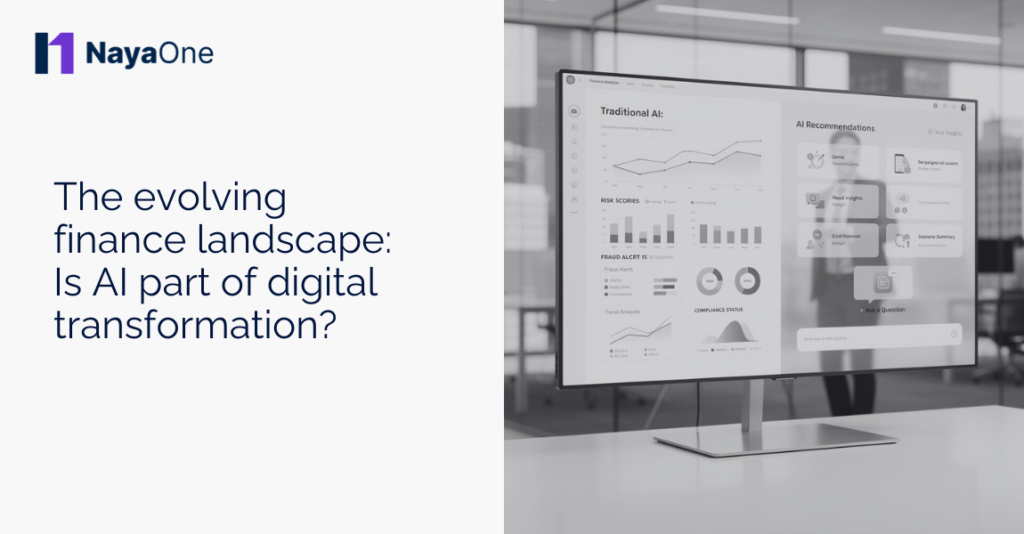
When you think about finance, you might picture banks with piles of paperwork and complex calculators. But things are changing, and quickly. Technology is moving into the heart of finance, shaking up how businesses operate and how customers interact with their money. Already, around 83% of financial institutions are integrating AI into their core operations, showing how widespread the shift really is. Among all the buzzwords floating around, one question keeps popping up: Is AI part of digital transformation? Spoiler alert: it absolutely is. But let’s take a step back and look at the bigger picture.
How is technology reshaping financial services today?
Technology has been rewriting the rulebook on financial services for years. Think about the apps on your phone that let you check your balance, transfer money, or even apply for a loan without ever setting foot in a branch. That’s just the tip of the iceberg.
Financial firms are adopting all sorts of new tools to improve their operations. Cloud computing is enabling secure and flexible access to data from anywhere. Data analytics helps businesses make smarter decisions by uncovering trends and risks hidden in mountains of information. Automation takes care of repetitive tasks, freeing up people to focus on more important work. But as these changes happen, one question arises: Is AI part of digital transformation? The answer is yes, with AI playing a central role in driving efficiency and innovation.
The big idea is a shift from traditional, paper-heavy, manual processes to more digital-first systems that are faster and more efficient. This reshaping creates opportunities for better service and more personalised customer experiences.
What benefits can innovation bring to financial institutions?
Innovation in finance is not just about shiny new toys. It comes with real benefits that can make a big difference. For starters, it can save time. When banks automate tasks like data entry or compliance checks, things happen quickly and with fewer errors. This means staff can spend their time on complex issues that need human insight. According to a recent survey, about 59% of finance functions are now using AI tools in their operations, showing how embedded the technology is becoming in core financial work.
Cost savings are another big plus. Digital solutions can reduce the need for physical branches and paperwork. Plus, cloud services cut down expenses on IT infrastructure. But beyond the dollars and cents, innovation often improves how customers experience financial services. For example, chatbots powered by artificial intelligence can handle simple queries at any time of day or night. This means no more waiting on hold or visiting a branch during business hours. Personalised financial advice and product recommendations based on data analysis can also help customers make better choices. So when considering all these changes, it’s worth asking: Is AI part of digital transformation? The answer is yes, as AI plays a major role in delivering these improvements.
All these improvements make financial institutions more competitive and able to respond quickly to changing market demands.
How are financial firms adapting to new digital demands?
Of course, adopting new technology is not always a walk in the park. Financial institutions often face challenges such as legacy systems that are outdated and difficult to replace. There can be resistance from staff who are used to doing things a certain way or worry that technology might replace their jobs.
Culture change is a huge part of digital transformation in finance. Organisations need to foster a mindset that welcomes innovation and continuous learning. This often means investing in training programs and involving teams early in the change process. Another important factor is security. With more data being stored and processed digitally, protecting sensitive financial information is critical. Firms must keep up with evolving cybersecurity threats and regulations, which requires ongoing vigilance and investment.
So, when facing these hurdles, one key question comes up: Is AI part of digital transformation? The answer is yes, and addressing it is crucial for successful technology adoption. Despite these challenges, many financial firms are finding ways to adapt. They partner with technology providers, create dedicated innovation teams, and take a step-by-step approach to digital transformation.
What future trends will define the finance sector?
Looking ahead, it is clear that artificial intelligence will play a major role in the future of finance. From fraud detection to credit scoring and even investment management, AI-powered tools are becoming more sophisticated and trusted.
Machine learning algorithms can analyse vast amounts of data to identify patterns that humans might miss. This helps reduce risk and make more accurate predictions. AI also supports the automation of complex processes, improving efficiency even further.
But it is not just AI. Other emerging technologies like blockchain and robotic process automation are also making waves. The finance sector is becoming a playground for innovation, with firms racing to stay ahead by adopting the latest tools.
One thing is certain: agility will be key. Those organisations that can quickly adapt to new technologies and market changes will thrive. It is an exciting time to be part of the finance industry, with plenty of opportunities to improve how we manage and use money.
Why does understanding AI’s role matter for finance professionals?
So, why does this all matter? Understanding that AI is part of digital transformation is crucial for finance professionals who want to stay relevant and competitive. It means recognising that technology is not just a support function but a driver of business strategy and customer value.
Embracing AI and financial technology can open doors to new services, better risk management, and improved operational efficiency. It also helps professionals anticipate future challenges and be prepared for them.
For finance leaders, the message is clear: staying informed and proactive about technology trends is not optional. It is essential. Whether you are working in a bank, an investment firm, or a financial services startup, knowing how AI fits into the digital transformation puzzle will help you navigate the evolving landscape with confidence.
So next time someone asks, Is AI part of digital transformation? You can confidently say yes and explain why it is transforming finance from the inside out.