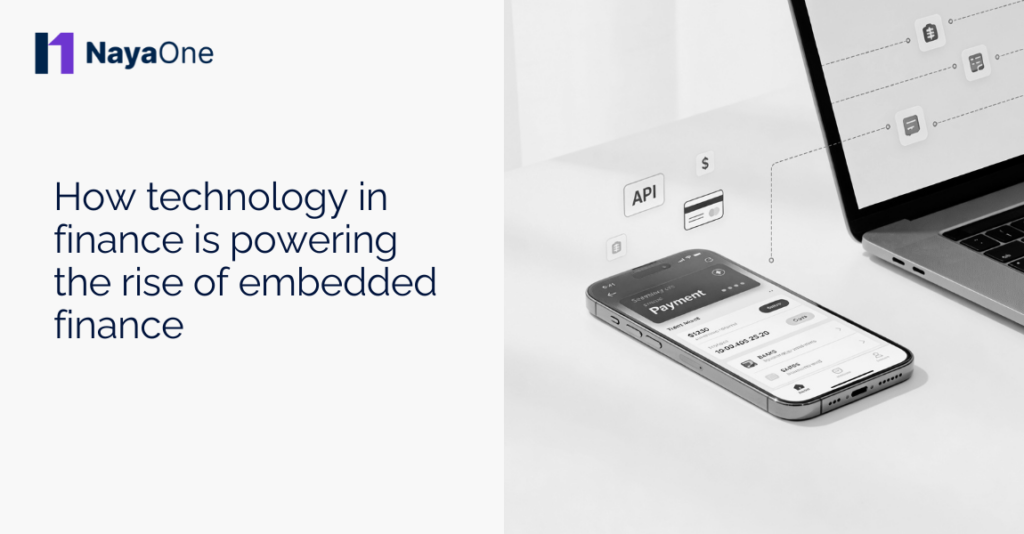
If you haven’t heard of embedded finance yet, you’re not alone, but it’s quickly becoming one of the most exciting trends in the financial world. Simply put, embedded finance means slipping financial services into everyday apps and platforms you already use, so seamlessly that you hardly notice it’s there. Whether it’s buying insurance at checkout or getting a loan inside a shopping app, embedded finance is reshaping how we interact with money. And behind this shift is the rapid evolution of technology in finance. In fact, a recent survey found that 60% of UK adults used embedded finance services, such as digital wallets, buy‑now‑pay‑later (BNPL), or integrated checkout‑financing, as part of their online shopping in the last 12 months.
So, what exactly makes embedded finance different from the usual banking services? And how has technology made this possible? Let’s take a look at why embedded finance is gaining momentum and what it could mean for the future of money management.
What makes embedded finance different from traditional banking?
Traditional banking often means logging into a separate app or visiting a branch when you need a financial service. Embedded finance breaks this mould by integrating financial products directly into non-financial platforms, made possible by advances in technology in finance. Think of it as bringing banking to where you already spend your time, whether that’s a ride-sharing app, an e-commerce site, or even a social media platform.
This means customers can access loans, payments, insurance, or investment options without switching apps or dealing with multiple logins. It creates a smoother, faster, and more convenient experience. For businesses, it’s a chance to offer more value to their customers by bundling financial services right alongside their core products.
The key difference? Embedded finance is all about context. It understands where you are and what you need in the moment, rather than expecting you to adapt to a traditional banking schedule or platform.
How are technological advancements enabling this shift?
The rise of embedded finance wouldn’t be possible without some serious technology breakthroughs. At the heart of it all are APIs, or application programming interfaces. APIs are like digital bridges that allow different software systems to communicate and share data securely. Thanks to APIs, a non-financial app can ‘plug in’ to banking systems or payment networks without building everything from scratch.
Cloud computing also plays a huge role. Instead of relying on bulky physical servers, cloud platforms offer scalable and flexible infrastructure, so fintech providers and businesses can quickly deploy and manage financial services without huge upfront investments.
Artificial intelligence is another game changer. AI helps tailor financial services to individual users by analysing data and predicting needs, making embedded finance not just convenient but personalised too.
Put these technologies together, and you get an ecosystem where financial services can be embedded anywhere, fast, secure, and scalable.
Why are businesses eager to adopt embedded finance solutions?
Businesses are waking up to the fact that embedded finance can be a win-win. For starters, it opens up new revenue streams. By leveraging advances in technology in finance to offer loans, insurance, or payment options directly to their customers, businesses can earn commissions or fees that weren’t possible before.
It also helps deepen customer engagement. When financial services are integrated into the user experience, customers spend more time and feel more connected to the platform. This loyalty can translate into repeat business and better customer satisfaction.
Moreover, embedded finance generates valuable data. Businesses can gain insights into spending patterns, preferences, and behaviours, helping them tailor their offerings and marketing efforts more effectively.
Sectors like retail, transportation, healthcare, and even education are jumping on board. For example, ride-hailing apps offer instant payment and tipping options, online retailers provide buy-now-pay-later solutions, and healthcare platforms facilitate easy insurance enrolment.
What challenges need to be overcome for embedded finance to reach its full potential?
Of course, it’s not all smooth sailing. Embedded finance faces several hurdles before it can fully deliver on its promise. One of the biggest is regulatory compliance. Financial services are tightly regulated, and when they’re embedded into non-financial platforms, navigating the legal landscape becomes complex. Different countries have varying rules about lending, payments, and data protection, making it a tricky maze to manage.
Security is another concern. Integrating financial services into multiple platforms increases the number of potential vulnerabilities. Companies need robust cybersecurity measures to protect user data and transactions.
Customer trust is also vital. Many users are still wary about sharing financial information with non-traditional providers. Building confidence requires transparency, clear communication, and consistent user experiences.
Luckily, technology in finance is rising to meet these challenges. Advanced encryption, real-time fraud detection, and regulatory tech (RegTech) tools are helping businesses stay compliant and secure while maintaining smooth operations.
What’s next for embedded finance as technology continues to evolve?
The future looks bright for embedded finance, especially as financial technology keeps advancing. One promising area is the expansion into underserved markets. Embedded finance has the potential to bring banking and financial tools to people who have been traditionally excluded, simply by integrating services into platforms they already use.
We can also expect more personalised financial products powered by AI and machine learning. Imagine financial advice popping up in your shopping app or budgeting tips tailored to your spending habits delivered through your favourite social network.
Another exciting frontier is the combination of embedded finance with emerging technologies like blockchain and quantum computing. These could make transactions faster, cheaper, and more secure than ever before.
The real challenge will be balancing innovation with regulation and trust, ensuring these services remain safe and fair for everyone.