
Digital transformation has become a buzzword tossed around boardrooms and coffee chats alike. But behind the hype lies a real challenge: how do businesses genuinely change to thrive in the digital age? It is not just about adding new tech or creating a shiny website. Digital transformation is a complex journey, and understanding its foundation is key.
In fact, 90% of organisations now pursue digital initiatives as part of their core business strategy, showing how widespread and essential digital transformation has become for competitiveness and growth.
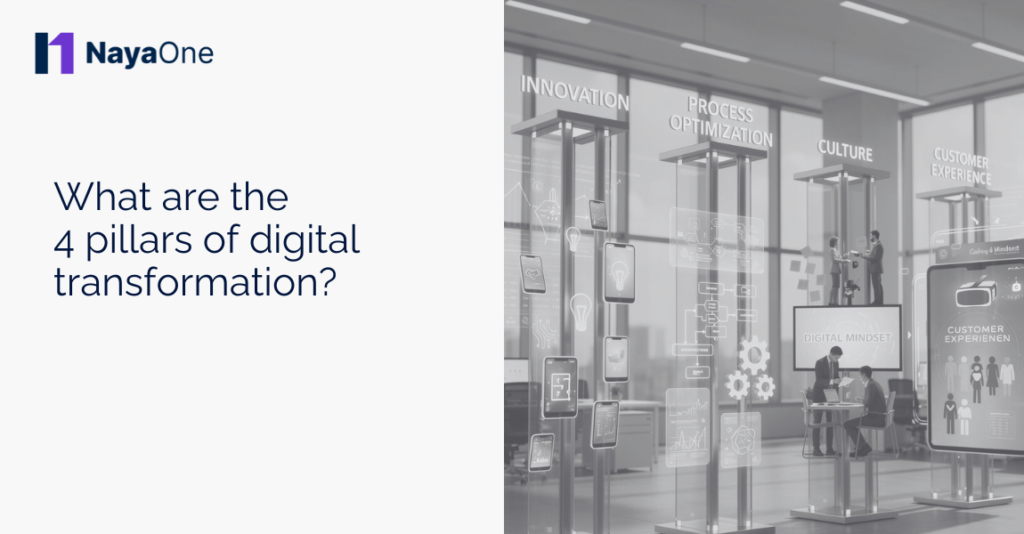
So, what are the 4 pillars of digital transformation? Think of them as the four essential supports holding up a brand‑new digital future for any organisation. If you get these right, the rest will follow more smoothly. Let’s dive into each one.
How does technology innovation drive transformation?
Technology is often the first thing that pops into mind when we hear “digital transformation.” And for good reason. From cloud computing and automation to AI and the Internet of Things, new tech is changing how businesses operate every day.
If you’re asking yourself, “What are the 4 pillars of digital transformation?” then technology innovation is right at the heart of it. But it’s not just about having the latest gadgets. It’s about using technology in smart, creative ways to make processes faster, improve accuracy, and unlock new opportunities. For example, cloud technology allows companies to scale effortlessly, while automation frees teams from repetitive tasks, giving them more time to focus on innovation.
One company might use AI-driven data analysis to predict customer behaviour and tailor services, while another might leverage IoT devices to streamline supply chains. These innovations aren’t random; they’re purposeful steps that transform how business gets done.
Technology also breaks down barriers between departments and external partners. With cloud platforms and collaborative tools, teams can work seamlessly together no matter where they are in the world. This connectivity is crucial for businesses aiming to stay competitive.
Of course, adopting new technology comes with challenges, too. Legacy systems, budget constraints, and staff training all need careful planning. But when done right, technology innovation becomes the powerhouse of transformation.
Why is organisational culture essential to success?
Here’s a truth bomb: digital transformation is as much about people as it is about technology. Without the right culture, even the best tech investments can flop.
Organisational culture sets the tone for how change is embraced or resisted. Leaders need to champion digital transformation by encouraging experimentation and rewarding innovation. Employees should feel empowered to learn new skills and challenge old ways of doing things.
Creating a digital-first mindset means making collaboration easier, breaking down silos, and fostering agility. When people buy into the vision, transformation gains momentum. If they don’t, new tech might end up collecting dust.
For example, imagine a company that invests heavily in a new CRM system but fails to train its sales team properly. Without cultural buy-in, the tool becomes an obstacle rather than a help. But when everyone understands why change matters and feels supported, adoption happens naturally.
Culture is also about mindset, being open to change, accepting failure as part of learning, and constantly seeking improvement. These attitudes turn transformation from a one-off project into an ongoing evolution.
Think of culture as the glue holding your transformation efforts together. It’s the secret ingredient that ensures technology and processes actually work for everyone involved.
What role does process optimisation play?
Technology and culture are important, but how work actually gets done is where the rubber meets the road. If you’re wondering, “What are the 4 pillars of digital transformation?” then process optimisation is a crucial part of the puzzle. It means rethinking workflows and systems to be more efficient and effective.
This often means automating repetitive tasks, eliminating unnecessary steps, and integrating digital tools that improve communication and decision-making. It’s about making processes simpler, faster, and less prone to errors.
When done right, process optimisation boosts productivity and frees up resources to focus on higher-value work. It can also enhance customer experiences by reducing delays and improving service quality.
A good example is a company moving from manual invoice processing to an automated system, cutting down errors and speeding up payments. This kind of change not only saves time but also reduces frustration for staff and customers alike.
Process optimisation isn’t just about efficiency. It’s also about flexibility. As markets and customer needs shift, businesses need processes that can adapt quickly. Digital tools can help create workflows that are more agile and scalable.
Plus, optimised processes improve transparency. With better tracking and analytics, managers get clearer insights into performance and bottlenecks. This data-driven approach supports smarter decision-making and continuous improvement.
How does customer experience reshape business models?
Customers are at the heart of digital transformation. The way businesses engage, serve, and delight customers is changing dramatically thanks to digital tools.
Improving customer experience means using data and technology to understand customer needs better and personalise interactions. Omnichannel strategies let customers connect through their preferred channels, whether that’s mobile apps, websites, social media, or even in-store tech.
Companies that prioritise customer experience often find themselves reshaping their entire business models. Subscription services, on-demand delivery, and customised offerings are just a few examples.
In fact, many digital transformations start with a simple question: how can we make things easier and more enjoyable for our customers? Focusing here ensures long-term loyalty and opens doors to new revenue streams.
Take retail, for example. The rise of e-commerce meant many traditional stores had to rethink their approach. By integrating online and offline experiences, retailers can offer personalised promotions, seamless returns, and faster service. This kind of transformation is driven by putting customers first.
Customer experience also influences employee experience. Happy customers make for happier staff, creating a positive cycle that benefits the entire organisation.
How do these pillars work together for lasting impact?
The magic happens when these four pillars don’t stand alone but support each other. Technology innovation without cultural buy-in can falter. Optimised processes without a customer focus miss the point. And culture without the right tools and processes can struggle to deliver results.
Businesses that understand what are the 4 pillars of digital transformation and address all of them are better positioned to succeed. It’s about balance, integration, and continuous learning.
The journey isn’t always straightforward. It takes patience, leadership, and a willingness to adapt. But with these pillars in place, companies can build a resilient foundation that not only survives but thrives in the digital era.
For businesses just starting out or those deep in the process, focusing on all four pillars creates synergy. Technology, including advances in financial technology, enhances culture by enabling collaboration tools; culture drives adoption of new processes; processes improve customer experience; and happy customers encourage further innovation.
So if you’re wondering what are the 4 pillars of digital transformation, remember they’re not just buzzwords but the critical building blocks for real change. Get these right, and you’re well on your way to future-proofing your business.